

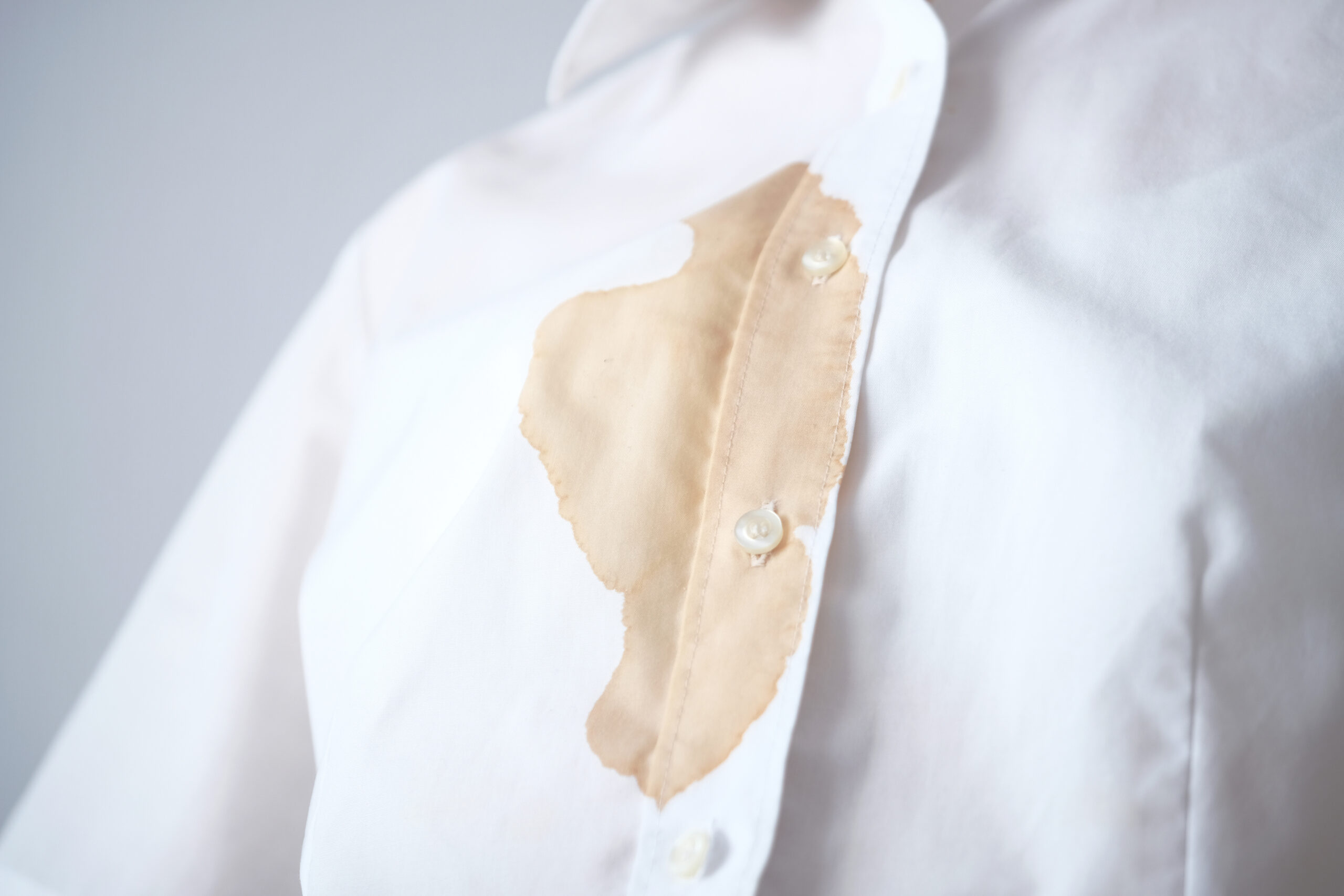
Can dry cleaning remove old stains? Some come out completely, some come out partially, and some don’t come out at all. The real factor isn’t age. It’s what happened to the stain after it landed on the fabric. That coat sitting in your closet since spring might have better odds than you think, especially if it was never washed, dried, or scrubbed with a home remedy.
This guide covers which stains dry cleaning can still fix, why heat and prior wash attempts matter more than time, and how to give any garment its best shot regardless of how long it’s waited.
It’s Not How Old the Stain Is, It’s What You Did to It
Contrary to popular belief, it’s usually not the age of the stain that causes trouble. It’s the way it’s been treated.
Three things typically lock a stain in place:
- Heat setting: running a stained garment through the dryer, or ironing over it, cooks the stain into the fibers. Heat causes the proteins or pigments in a stain to bond permanently with the fabric.
- Home remedies: club soda, vinegar, dish soap, stain sticks, these can chemically alter the stain before a professional ever sees it, sometimes making it worse instead of better.
- Oxidation: left exposed to air over time, certain stains change chemically and darken or yellow, becoming a different and tougher problem than the original spill.
A stain that’s sat quietly in a closet, untouched, hasn’t been through any of that. It’s often more workable than a stain from two weeks ago that already went through a full wash and dry cycle. If you’re staring at a month’s old stain wondering if it’s too late, the honest answer depends far more on its history than its birthday.
Why This Matters for the Garment You’re Holding Right Now
Think back to what actually happened after the stain occurred. Did the garment get washed at home first? Did it go in the dryer before anyone noticed the mark? Did you try to blot it out with something from under the sink? Each of those steps changes what a professional cleaner is actually working with, and it’s worth knowing before you assume the stain is a lost cause.
Stain Types That Come Out Even After Months
Some stains are genuinely forgiving, even with time on the clock.
- Oil and grease: salad dressing, motor oil, butter, cooking splatter, these respond well to dry cleaning solvents, which are specifically formulated to break down oil-based residue. Age has little effect here since oil doesn’t oxidize the way other stains do.
- Makeup and cosmetic residue: foundation, lipstick, and mascara marks are typically oil-based too, which means the same solvents that lift grease often lift makeup, even from a blouse that’s been in the back of the closet for a season.
- Untouched water-based stains: coffee, tea, or wine that never made it into a hot dryer and was never scrubbed at home often still comes out, because the stain hasn’t been chemically altered or bonded to the fibers.
What These Stains Have in Common
Every stain in this category shares one trait: nothing was done to make it worse. No heat, no home treatment, no prolonged exposure to sunlight or humidity. That untouched status is doing more work than the number of months on the calendar.
Stain Types That Get Progressively Harder to Remove
Age genuinely works against certain stains, particularly under the wrong conditions.
- Protein stains: sweat, food residue, and blood become harder to treat the longer they sit in warm conditions, since warmth accelerates the way proteins bond to fabric.
- Tannin stains: red wine and coffee are workable early on, but if they’ve been heat set or previously treated with bleach, they become significantly more resistant to solvent treatment.
- Yellowed or darkened marks: a stain that has changed color since it first appeared is a sign of oxidation, not just aging. Oxidized stains are a different chemical problem than the original spill, and they don’t always respond to the same treatment.
Why Waiting Just to See Doesn’t Help
Exposure to heat, sunlight, and humidity during a waiting period is often what pushes a treatable stain into the harder-to-remove category. If a stain has already changed color, that’s the clock working against you, not for you.
Some people leave a stain untreated on purpose, hoping it fades on its own or telling themselves they’ll deal with it later. In practice, that waiting period rarely helps and often works against the stain instead.
What You Should (and Shouldn’t) Do Before Bringing It In
What you do between now and drop-off can matter as much as anything a professional does after.
DO:
- Keep the garment cool and dry until you bring it in.
- Point out the stain specifically and describe what caused it, if you know.
- Bring it in sooner rather than later, even if it’s already old.
DON’T:
- Run it through a home wash or dryer cycle. Heat is the single biggest risk factor for locking in a stain.
- Apply home remedies. Club soda, stain pens, and DIY tricks usually complicate professional treatment rather than help it.
- Wait longer in case it comes out on its own: stains don’t self-resolve, and time spent waiting is often time spent oxidizing.
Why Telling Your Cleaner the Cause Actually Matters
Knowing whether a mark is oil, wine, blood, or something else changes the entire treatment approach. A cleaner who knows the cause can select the right solvent and technique from the start, rather than testing blind. That single detail can meaningfully improve the odds on a stain that’s already had months to sit.
What a Professional Actually Does to Try to Remove an Old Stain
How dry cleaning removes stains, especially old ones, isn’t a single step. It’s a sequence of judgment calls.
- Identify the stain type. Age, color, and fiber behavior all offer clues about what’s actually in the fabric.
- Test on an inconspicuous area. Before any solvent touches the visible stain, it’s tested on a hidden seam or hem to confirm the fabric can handle it.
- Choose the right method. Depending on the stain and the fabric, that might mean dry cleaning solvent, wet cleaning, or a combination of both.
- Know when to stop. A skilled cleaner recognizes the point at which continuing to treat a stain risks damaging the garment itself and knows when to hold back rather than push further.
This Is the Part You’re Actually Paying For
Anyone can pour solvent on a stain. What separates a professional result is the judgment behind each step, especially on delicate fabrics where being too aggressive could ruin the piece entirely. That expertise determines whether an old stain gets a real shot at coming out or is written off too early.
Stop Guessing About That Stain. Urban Valet Cleaners Will Check It For You
You’ve got a garment in mind right now, and you’re wondering if it’s worth the trip. It is. The only way to know for sure is to have someone actually look at it.
That’s what we do at Urban Valet Cleaners, on garments in every condition, at every stage of a stain’s life. Our dry cleaning service runs on a nine-point process, including three separate inspection points, so nothing gets treated blind and nothing gets rushed. We’ll also tighten loose threads and replace cracked buttons at no charge while your garment is with us.
Bring it in. We’ll give you a straight answer, not a sales pitch.
Phone: +1 716-419-5134
Free pickup and delivery available in Buffalo, Hamburg, Orchard Park, and nearby communities.