

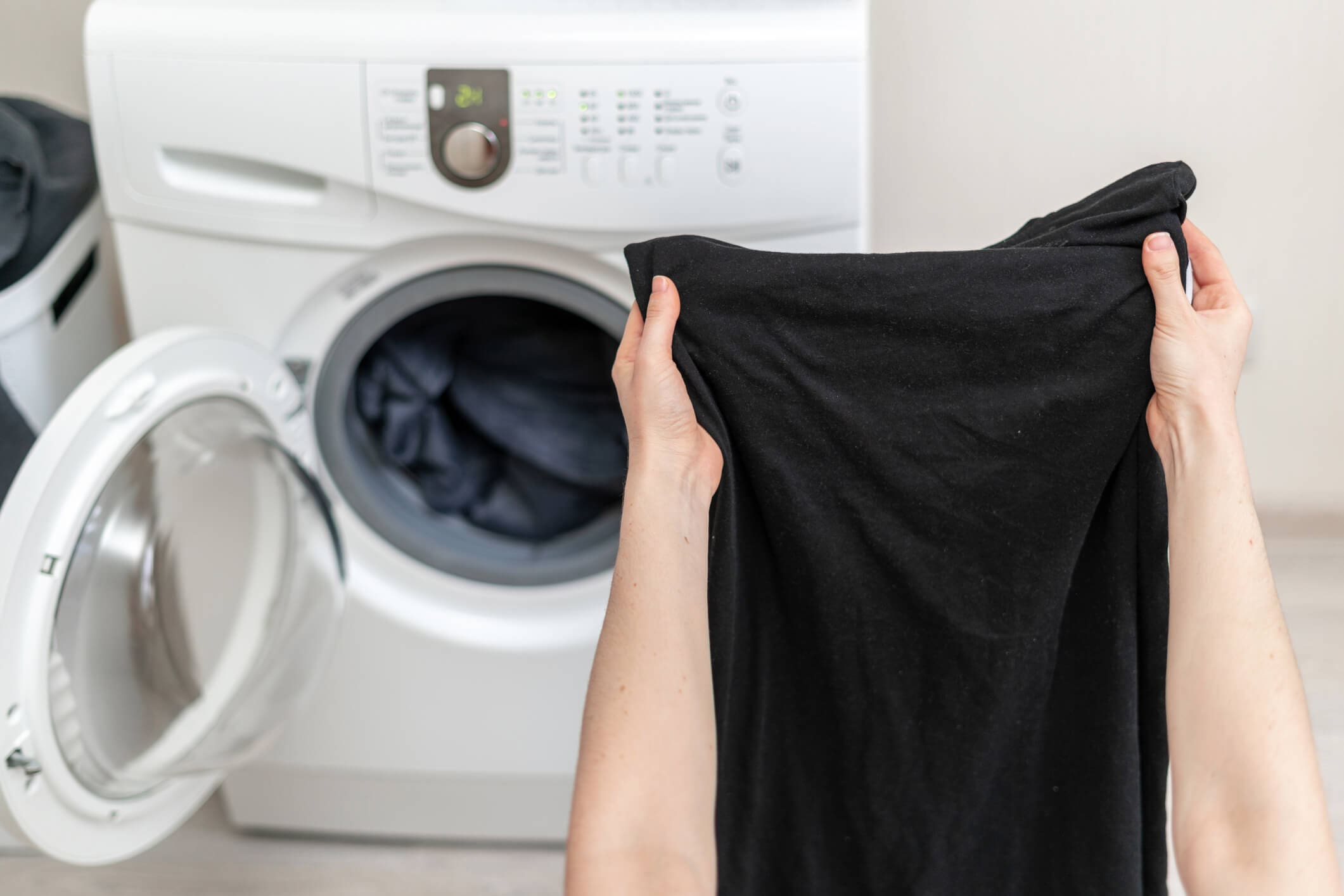
Pull out a dark shirt you’ve owned for six months. Compare it to the day you bought it. If it looks noticeably lighter, duller, or grayer than it should, the washing machine is almost certainly the reason.
Fading at that pace isn’t normal wear. It’s the result of four laundry habits that strip color from dark fabric faster than the dye can hold up, and most people repeat all four of them every single time they do laundry without realizing it.
This guide identifies each mistake, explains what it does to your clothes at the fiber level, and gives you a straightforward fix for each.
01 | Washing Dark Clothes in Hot or Warm Water
This is the number one fading culprit. When you move through a Saturday pile of towels and uniforms, the temperature dial is the last thing on your mind. But it does the most damage.
Here’s what happens:
Heat causes fabric fibers to expand. When they expand during the wash cycle, the dye molecules trapped inside escape into the water. Every warm or hot wash pulls out a little more color, and on dark clothes such as black, navy, or deep red, that loss shows up fast.
A black T-shirt washed in warm water 20 times will look noticeably duller than the same shirt washed in cold water the same number of times. Same shirt, same detergent, same cycle. The only variable is temperature. The fading is cumulative, and it does not reverse.
Cold water is the single most effective change you can make for dark clothes. If you change nothing else after reading this guide, change this.
The Right Temperature for Different Dark Garment Types
- Dark Cottons
For dark T-shirts, towels, and casualwear, use cold water at 30°C or below. This is the safest default for most standard dark loads and helps preserve the color. - Dark Denim
Wash dark jeans and denim in cold water. This helps reduce fading and can also minimize shrinkage. - Dark Synthetics
Athletic wear, swim cover-ups, beachwear, and other synthetic fabrics should generally be washed in cold water. Synthetic materials typically do not respond well to high temperatures. - Dark Workout Gear
Use cold or lukewarm water. Lukewarm water may be helpful when dealing with stronger odors, but avoid excessive heat and rinse the garments thoroughly. - Any Dark Garment
As a general rule, avoid hot water when washing dark clothing. Only use hot water if the garment’s care label specifically recommends it, which is uncommon for dark fabrics.
02 | Washing Darks Inside Out Is Optional – It Isn’t
Most people have heard this tip. Most people skip it, especially when you’re pulling gear out of three different sports bags and just trying to get through the pile before dinner.
Here’s what happens:
During every wash cycle, clothes tumble, rub against each other, and drag across the drum wall. That mechanical friction removes surface dye, and it does it from the outside of the garment first, because that’s the side making contact. Turning garments inside out redirects all of that abrasion to the inner surface, which nobody sees.
- Dark jeans that get washed after every busy day. The waistband and thigh areas fade first because those surfaces face outward and absorb the most friction. Flip them inside out, and you protect the visible side.
- Dark school and sports uniforms that go through the wash three to four times per week. The cumulative abrasion across a season adds up fast.
- Dark towels that come home sandy or muddy. Sand and dirt particles in the wash act like sandpaper against other garments. If these towels tumble against dark clothes, the abrasion is even worse.
Twenty seconds of flipping clothes inside out before they go into the machine prevents weeks of visible fading. The effort-to-result ratio on this one is enormous.
Quick tip: Make it a habit when you toss clothes into the hamper, not at the machine. If they go into the hamper inside out, they get washed inside out. No extra step on laundry day.
03 | Using Too Much Detergent on Dark Loads
More detergent feels like cleaner clothes. On dark fabrics, overdoing it creates a visible problem that’s easy to confuse with fading.
Here’s what happens:
When you use more detergent than the rinse cycle can remove, the soap dries into the fabric as a faint white or grey film. On dark clothes, this shows up as a dull, washed-out appearance. Hold a “faded” black T-shirt up to the light, and if the surface has a chalky cast rather than a smooth finish, you’re looking at detergent residue, not dye loss.
With the volume of laundry a family runs, especially in winter, over-measuring is extremely common. You’re moving fast, the loads keep coming, and an extra splash of detergent feels like insurance. It’s not. It’s the problem.
The right amount: One tablespoon of liquid detergent is usually sufficient for a standard dark load. That feels like almost nothing until you see how concentrated most modern formulas actually are. If you see suds lingering in the rinse cycle, you’re using too much.
Why a Color Safe Detergent Makes a Visible Difference Over Time
Standard detergents include optical brighteners, chemicals designed to make whites look more vibrant under light. Those same agents work against dark clothes by stripping dye over time. It’s a small product swap with compounding results across dozens of loads.
Standard Detergent
Standard detergent often contains optical brighteners that help whites and light-colored fabrics appear brighter. However, repeated washing can gradually strip dye from darker fabrics, causing them to fade over time.
Standard detergent is best suited for whites and light-colored clothing.
Dark or Color-Protecting Detergent
Dark or color-protecting detergent is typically made without optical brighteners. Instead, it may contain dye-stabilizing ingredients that help protect the fabric’s color and reduce fading.
This type of detergent is a better choice for black, navy, dark, and other deep-colored garments.
04 | Machine Drying Dark Clothes on High Heat
If hot water is the most common mistake, high-heat drying is the most damaging. Most people think carefully about their washer settings and rarely question the dryer. That’s the problem.
Here’s what happens:
A dryer on high heat runs at sustained temperatures for 45 to 60 minutes straight. The fabric doesn’t warm up and cool down the way it does in a wash cycle. It’s baked continuously, and dye is released the entire time. For families running two or three loads back to back on high heat just to get through the pile, the dryer ages dark clothes faster than anything else in the laundry room.
The Best Way to Dry Dark Clothes
- Low-heat tumble dry reduces fading dramatically compared to high heat. The load takes longer. The clothes last longer. That’s the tradeoff, and it’s worth making.
- Air drying (flat or hung in shade) is the gentlest option and works especially well for dark knits, denim, and structured dark garments.
- Shade drying outdoors is realistic and effective in Buffalo for a good portion of the year. A shaded covered porch works well. The warm breezes dry clothes quickly without any heat damage.
The one thing to avoid: Direct sunlight. Sun bleaching on a clothesline will fade darks faster than a hot dryer cycle. UV exposure is more damaging to dark dye than sustained dryer heat. Always shade dry.
Rule of thumb: If it’s black, navy, or deep-toned, keep it out of high heat. This applies to both the washer and the dryer.
The Best Way to Wash Dark Clothes: A Quick Reference Summary
Here is the best way to wash dark clothes, all in one place. Bookmark it, screenshot it, tape it to the laundry room wall.
- ✅ Cold water wash. Every time. No exceptions for darks.
- ✅ Turn garments inside out before they go into the machine. Make it a hamper habit.
- ✅ Color-safe or dark-specific detergent. No optical brighteners.
- ✅ One tablespoon of detergent for a standard load. Less than you think.
- ✅ Low heat or air dry in shade. This is where the most fading protection actually happens.
- ✅ Wash darks separately from lights. Protects both sides and keeps lint off dark fabric.
- ❌ No hot water. Ever.
- ❌ No high heat drying. The dryer does more damage than the washer.
- ❌ No direct sunlight for drying. UV fades faster than heat.
Six steps to follow. Three things to stop doing. No special products. No complicated process. Just consistent habits applied to every dark load.
Less Fading – Less Laundry Time – That’s What Urban Valet Cleaners Delivers for Buffalo Households
If you run multiple loads a week on top of work, family, and everything else, getting every detail right on every load is a lot to ask. Don’t feel rushed after work. Call us to pick up your laundry instead!
For Buffalo, New York households with more laundry than time, the Premier Wash and Fold Laundry Service at Urban Valet Cleaners handles your darks with care every time. We use high-quality, eco-friendly detergents and give your clothes and home essentials meticulous attention, so they come back clean, fresh, and neatly folded. With our FREE laundry Pickup and Delivery Service, we come to you, so you can spend your time on more worthwhile activities.
If you’ve been searching for a Wash and Fold Laundry Service in Buffalo, New York, we’re the team that gets the details right so your dark clothes keep their dark hue.
Contact Urban Valet Cleaners today to schedule your FREE laundry pickup!
📍 Buffalo, NY: 620 Elmwood Ave., Buffalo, NY, 14222
📞 716-419-5217 x107
📍 Corporate Headquarters: 106 Evans St., Hamburg, NY, 14075
📞 716-419-5217 x104
📍 Orchard Park: 4081 N. Buffalo St., Orchard Park, NY, 14127
📞 716-419-5217 x106