

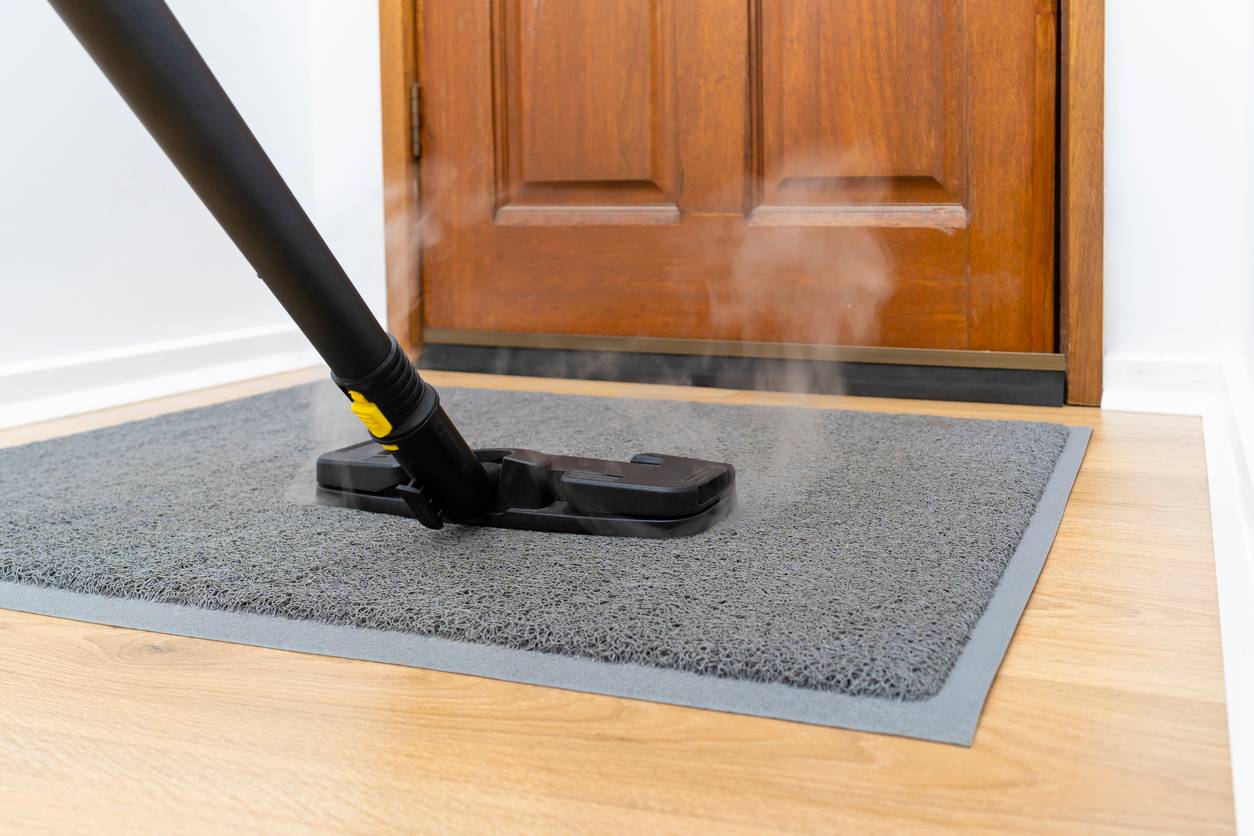
After hosting Thanksgiving guests, an entryway rug usually shows exactly where everyone walked in – mud, crumbs, and a few spilled drinks along the way. Four quick steps can make it look and feel better today, but they aren’t a substitute for area rug cleaning when dirt’s already worked deep into the fibers. This is a refresh, not a full clean.
Here’s the four-step version, in order.
Step 1: Remove and Vacuum Loose Debris First
Start by removing loose crumbs, dried mud, and other surface debris. If the construction and care instructions of the rug allow it to be shaken outside safely, that’s one option. Otherwise, start with a thorough vacuuming.
Vacuuming regularly helps remove the dust, dirt, and particles that accumulate with foot traffic. The Carpet and Rug Institute recommends special care when vacuuming area rugs with fringe, using gentle suction from the center toward the fringe and keeping the beater bar away from the strands.
Vacuum Tip: Don’t Forget the Edges
Use an appropriate attachment around edges, corners, and other places where crumbs and grit collect. For delicate, Oriental, Persian, or heirloom rugs, follow the manufacturer’s care instructions rather than assuming the same vacuuming method is safe for every rug.
Step 2: Blot, Don’t Rub, Any Fresh Spots
Press a clean, white absorbent cloth onto any fresh spill and lift rather than rubbing at it. Repeat with a fresh section of cloth as moisture transfers.
This is one of the most important techniques on this entire list. The American Cleaning Institute (ACI) recommends that you dab at a rug stain instead of rubbing it, since rubbing can work the spill further into the fibers.
Work From the Outside In
When spot-treating, work from the outside edge toward the center to help keep the affected area from spreading. Scoop up semi-solid food spills carefully with a spoon first, and vacuum loose dried solids before applying moisture.
Step 3: Spot-Treat Based on the Rug and What Spilled
This is where the actual spill and the rug material matter more than a single go-to product. One all-purpose method isn’t appropriate for every rug, since fiber type, dyes, backing, construction, and manufacturer instructions can affect what’s safe to use.
Start by removing as much of the spill as possible through blotting or carefully lifting solids. Then use a cleaning product or treatment that’s appropriate for the rug and the specific stain. It’s worth it to test any cleaning solution on an inconspicuous area first. Urban Valet Cleaners has also covered the value of keeping white cloths and appropriate spot-cleaning supplies ready for everyday rug spills, especially in busy households.
For delicate, handmade, Oriental, Persian, silk, wool, or heirloom rugs, be especially cautious with DIY treatments. When the appropriate cleaning method isn’t clear, professional guidance is safer than experimenting with whatever cleaner happens to be nearby.
Step 4: Let It Dry Completely Before Foot Traffic Resumes
After spot-treatment, remove as much moisture as possible with a clean, absorbent cloth and give the treated area time to dry before normal foot traffic resumes. Avoid oversaturating the rug during spot-cleaning. Moisture that reaches the backing can create additional problems, and some cleaning products can leave residue behind if they’re used too heavily or aren’t removed according to their instructions.
Good air circulation can help the treated area dry. Just avoid adding unnecessary heat unless the rug’s care instructions specifically allow it.
What These Four Steps Won’t Solve
None of these four steps involve professional deep cleaning, and that’s intentional. A home refresh is meant to handle loose debris and manageable surface spots, not every condition that can develop deeper in a rug over time.
Buffalo winters add another challenge, with slush, tracked-in soil, and other outdoor debris making their way across entryway rugs throughout the season.
If any of the following show up after finishing, it may be time for something stronger:
- A stain that remains after appropriate spot-treatment.
- An odor that lingers once the rug is completely dry.
- A rug that still feels noticeably soiled or gritty after thorough vacuuming.
- A delicate or valuable rug that you don’t want to risk treating incorrectly.
How frequently a rug needs professional cleaning depends on foot traffic, household conditions, rug construction, and manufacturer recommendations. A heavily used entryway rug may need attention sooner than a decorative rug in a low-traffic room.
When Vacuuming Stops Being Enough, Turn to Urban Valet Cleaners
Not every rug needs professional cleaning right now. If routine vacuuming and careful spot-treatment are still keeping your rugs in good shape, continue with them. Professional cleaning is there for the point when surface care is no longer enough.
If you’re in Buffalo, New York and need an area rug cleaner, Urban Valet Cleaners provides professional rug cleaning through our Home Goods Care Service, including care for Persian and Oriental rugs. We also serve customers across our other locations and service areas.
Continue with routine care for now, and keep Urban Valet Cleaners in mind when your rug eventually needs something more thorough.
Buffalo: 620 Elmwood Ave, Buffalo, NY 14222, (716) 666-3602
Hamburg: 106B Evans St, Hamburg, NY 14075, (716) 885-4351
Orchard Park: 4081 N Buffalo St, Orchard Park, NY 14127, (716) 419-5134